Shopify Plus is an enterprise ecommerce platform designed for merchants managing substantial sales volumes, complex operations, or specialized customer requirements. It provides advanced checkout customization, business-to-business selling capabilities, and organizational tools that support more demanding commerce environments.
Understanding what kind of businesses use Shopify Plus can help retailers determine whether their existing Shopify plan meets their needs or whether upgrading would provide measurable value.
From direct-to-consumer brands to international retailers, Shopify Plus serves businesses with different operating models. However, the platform is not exclusively for large corporations. Its suitability depends on the complexity of a company’s commerce requirements and the value of features unavailable on standard plans.
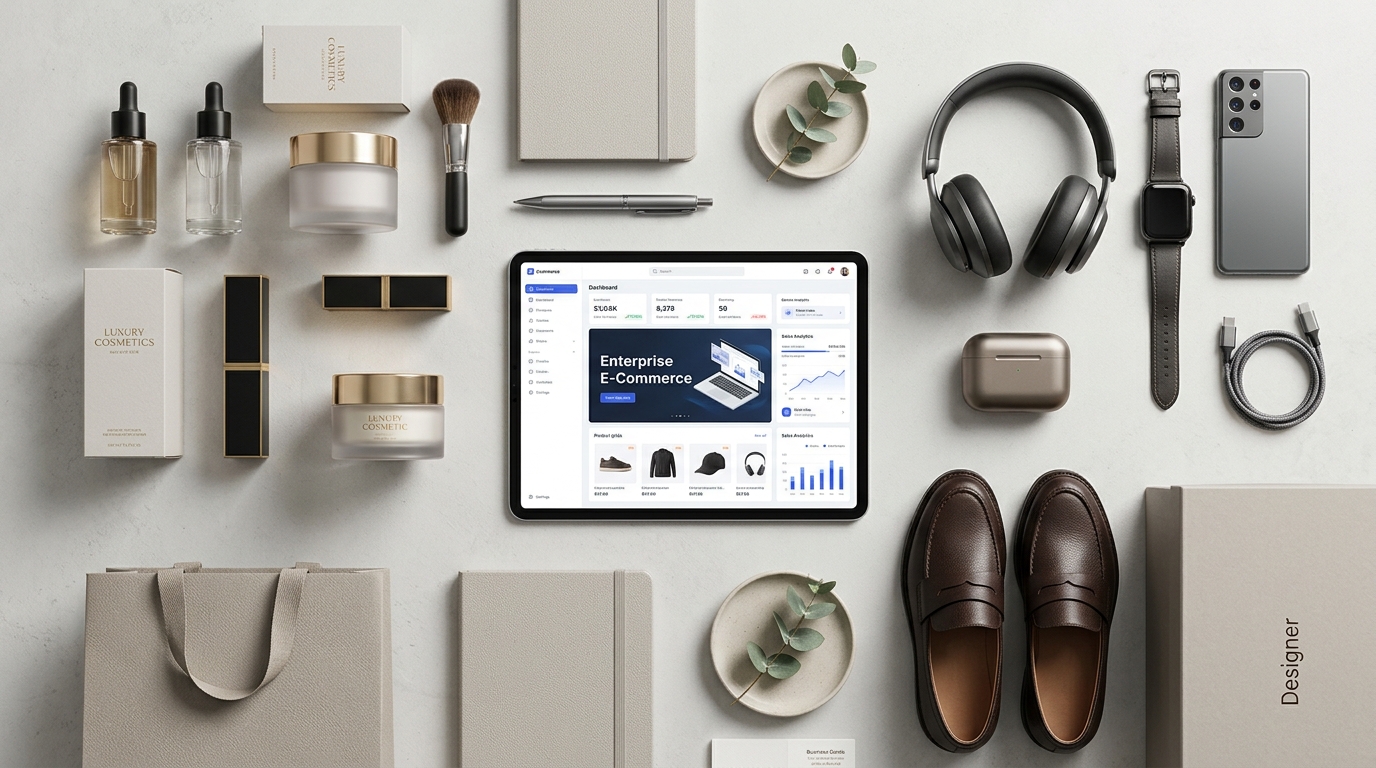
What Kind of Businesses Use Shopify Plus Across Different Industries?
Shopify Plus supports businesses in fashion, beauty, electronics, wholesale distribution, and other retail sectors. Although these companies sell different products, they often face similar challenges involving checkout customization, customer segmentation, and managing multiple sales operations.
Here are seven business types that commonly benefit from the platform.
1. High-Volume Direct-to-Consumer Brands
Direct-to-consumer (DTC) companies sell products through their own websites, giving them direct relationships with customers.
These brands often experience substantial traffic during product launches, seasonal campaigns, and promotional events.
Shopify Plus supports their operations with advanced checkout capabilities, access to enterprise-oriented tools, and infrastructure built for high-volume commerce.
Real example: Gymshark
Gymshark, an international fitness apparel brand, adopted Shopify Plus after experiencing limitations with its previous ecommerce platform. Shopify’s published case study describes how the migration supported its expanding international operations.
For rapidly growing DTC brands, what kind of businesses use Shopify Plus often comes down to their requirements during demanding sales periods.
2. Wholesale and B2B Companies
Wholesale businesses frequently need pricing arrangements that differ from standard consumer transactions.
Shopify Plus supports company-specific product catalogs, direct catalog assignments, and advanced B2B payment capabilities.
For example, a cosmetics distributor might provide separate pricing to salons, independent retailers, and large purchasing groups.
Although Shopify offers B2B functionality on Basic, Grow, and Advanced plans, Plus provides greater flexibility for businesses managing numerous customer-specific agreements.
These requirements make wholesale distributors a significant category when examining what kind of businesses use Shopify Plus.
3. International Ecommerce Retailers
Selling across international markets introduces requirements involving currencies, languages, regional storefronts, and localized customer experiences.
Shopify Plus organizations can operate one main store and up to nine eligible expansion stores under a standard agreement without additional store subscription charges.
Expansion stores must satisfy Shopify’s eligibility requirements and generally operate as extensions of the main brand.
For example, an apparel retailer might maintain dedicated storefronts for North American, European, and Asian markets.
However, separate stores do not automatically synchronize all inventory and product information. Additional integrations may be necessary.
Businesses planning international growth should assess their requirements before undertaking a migration to Shopify.
4. Fashion and Beauty Brands
Fashion and beauty companies often introduce seasonal collections, limited-edition products, and promotional campaigns requiring coordinated merchandising.
Shopify Plus can support advanced checkout experiences and more demanding commerce operations.
Real example: Dermalogica
Dermalogica, an established skincare company, is among the brands Shopify identifies as using Shopify Plus.
For fashion and beauty retailers considering what kind of businesses use Shopify Plus, the relevant consideration is whether their checkout, marketing, or operational requirements exceed their current platform’s capabilities.
5. Omnichannel Retailers
Omnichannel retailers operate across physical stores, ecommerce websites, and sometimes additional marketplaces.
Their priorities commonly include accurate inventory availability, coordinated fulfillment, and consistent customer information.
Shopify supports online and offline retail through its ecommerce platform and Shopify POS.
Real example: Allbirds
Footwear retailer Allbirds uses Shopify Plus and Shopify POS. Its ship-from-store implementation allows eligible retail inventory to fulfill online orders, helping the company improve inventory availability.
Although Shopify POS is not exclusive to Plus, companies with additional enterprise requirements may benefit from combining these capabilities.
6. Businesses With Complex Checkout Requirements
Some merchants require checkout functionality beyond standard branding adjustments and payment configurations.
Shopify Plus supports advanced checkout customizations through compatible apps and checkout UI extensions.
These capabilities can help businesses introduce specialized messaging, additional checkout fields, or conditional experiences.
For merchants evaluating what kind of businesses use Shopify Plus, checkout requirements can provide a stronger justification than sales volume alone.
Companies should determine whether their desired customizations genuinely require Plus before committing to an upgrade.
7. Businesses With Complex Systems and Integrations
Established ecommerce companies may rely on enterprise resource planning (ERP), warehouse management, customer relationship management (CRM), and fulfillment platforms.
Connecting these systems can involve substantial data synchronization and workflow requirements.
Shopify Plus offers enterprise-focused administration and platform capabilities that may support these operations.
However, standard Shopify plans also support many third-party integrations. Plus becomes relevant when a business needs specific enterprise features rather than integration functionality alone.
How to Know Whether Your Business Needs Shopify Plus
After identifying what kind of businesses use Shopify Plus, the next consideration is whether the platform’s additional capabilities justify its cost.
Evaluate these factors:
- Checkout requirements: Do you need advanced customizations unavailable on your current plan?
- Wholesale operations: Do your B2B customers require direct catalog assignments or complex purchasing arrangements?
- International selling: Would eligible expansion stores simplify regional operations?
- Administration: Does your company need centralized management across multiple stores?
- Financial value: Will the expected benefits outweigh subscription, development, and integration expenses?
Shopify Plus is the enterprise offering of Shopify, an ecommerce platform that supports online storefronts, retail operations, and businesses selling across multiple channels. Merchants should evaluate their specific requirements before choosing an enterprise subscription.
Conclusion
The answer to what kind of businesses use Shopify Plus extends beyond large retailers. DTC brands, wholesalers, international merchants, and companies managing complex commerce requirements can benefit when their operations demand its advanced capabilities.
Businesses should evaluate specific feature requirements, operating costs, and expected returns rather than upgrading based solely on revenue or company size.
Zissu Global helps ecommerce businesses evaluate platform requirements, plan Shopify migrations, and develop solutions aligned with their commercial objectives.