Clarifying what does a UI UX designer do begins with examining how interface choices directly shape shopper behavior. A UI UX designer plans how a digital experience functions, how it feels to the user, and how visual cues guide visitors toward purchase decisions. In ecommerce, that means helping shoppers move from browsing to product understanding, cart activity, checkout, and repeat purchase with less confusion.
For Shopify brands, the role matters because design is not only about making the store look polished. A strong designer studies the buying journey, organizes page content, improves usability, shapes the visual system, and works with developers to make sure the final storefront supports real customer behavior.
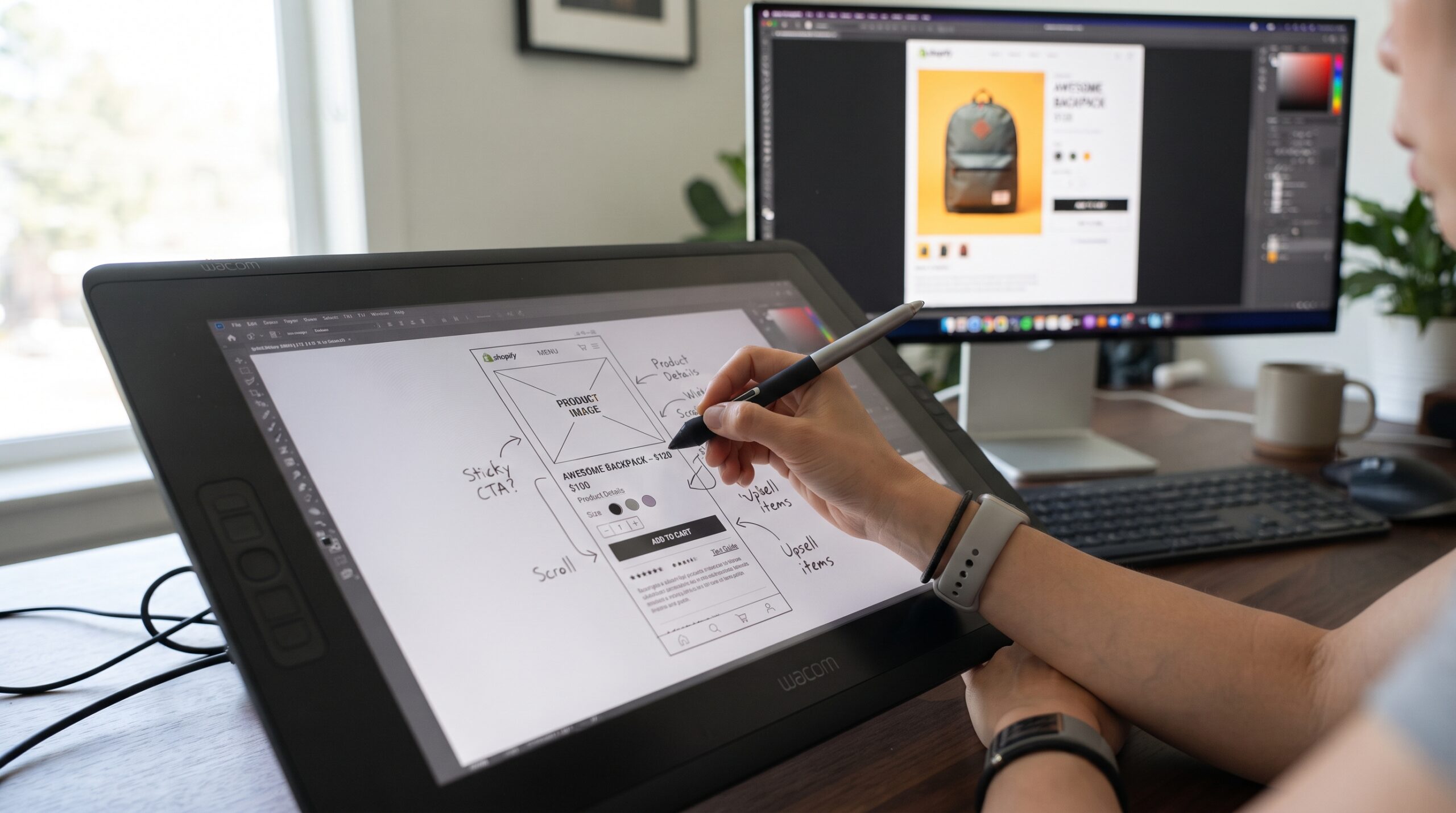
What Does a UI UX Designer Do in Ecommerce?
A UI UX designer structures and refines the entire shopping experience. User Experience (UX) dictates functional navigation and content hierarchy, while User Interface (UI) establishes visual styling and screen behavior.
For Shopify brands evaluating what does a UI UX designer do within an active growth strategy, the answer starts with customer flow analysis. The designer looks at what shoppers need to see, where they may hesitate, which pages create friction, and how the store can make buying decisions easier.
A designer may review:
| Store Area | Design Responsibility |
|---|---|
| Homepage | Direct visitors toward key products, collections, offers, or brand messages |
| Navigation | Make categories, search, and menus easier to use |
| Collection pages | Improve filtering, sorting, product cards, and browsing paths |
| Product pages | Organize images, benefits, variants, trust signals, and buying details |
| Cart | Reduce confusion before checkout |
| Mobile layout | Make shopping easier on smaller screens |
| Customer account pages | Improve access to orders, returns, subscriptions, or saved details |
The role connects design decisions with business outcomes. A UI UX designer should not only ask whether a page looks good. They should ask whether the page helps the customer understand, trust, and act.
UI Work and UX Work Are Related but Not the Same
UI and UX often overlap, especially in ecommerce teams, but they are not identical.
UX work usually includes research, journey mapping, page structure, wireframes, usability review, content placement, and flow decisions. It answers questions such as:
- What does the shopper need first?
- Where does the customer get confused?
- Which step slows the purchase?
- Does the page answer the right objections?
- Can a mobile shopper complete the task easily?
UI work focuses on the visible interface. It includes typography, spacing, colors, buttons, forms, icons, imagery, section styling, states, and responsive layout behavior.
A designer who handles both sides must balance logic and presentation. A beautiful interface can still fail if the journey is unclear. A useful flow can still feel weak if the visual design does not build trust.
A UI UX Designer Builds the Store Around the Shopper
In Shopify, the designer should understand how customers actually shop. That means thinking beyond static page layouts. Product discovery, comparison, trust, checkout confidence, and mobile behavior all influence the design.
A designer may plan different paths for different types of visitors. A new visitor may need brand education and proof. A returning customer may need faster access to products. A wholesale buyer may need account-specific information. A gift buyer may need clearer categories and delivery details.
This is where Shopify brand design becomes useful. The store’s visual identity should support the buying journey instead of sitting on top of it as decoration.
Strong ecommerce design helps shoppers answer key questions quickly:
- Am I in the right place?
- Is this product right for me?
- Can I trust this brand?
- What makes this product different?
- What happens after I order?
- How do I move forward?
When those answers are easy to find, the store feels more confident and easier to use.
Research Turns Design Into a Practical Decision
The practical answer to what does a UI UX designer do is not limited to creating screens. A strong designer also studies users, competitors, analytics, support questions, customer reviews, heatmaps, and conversion issues.
For ecommerce, research may include:
- Reviewing analytics to find drop-off points
- Studying search behavior and collection usage
- Checking mobile navigation issues
- Reading customer support questions
- Reviewing product-page objections
- Comparing competitor shopping flows
- Testing page layouts with real users or internal teams
Research prevents the design from becoming personal preference. Instead of choosing a layout because it looks modern, the designer can connect the decision to customer needs and store goals.
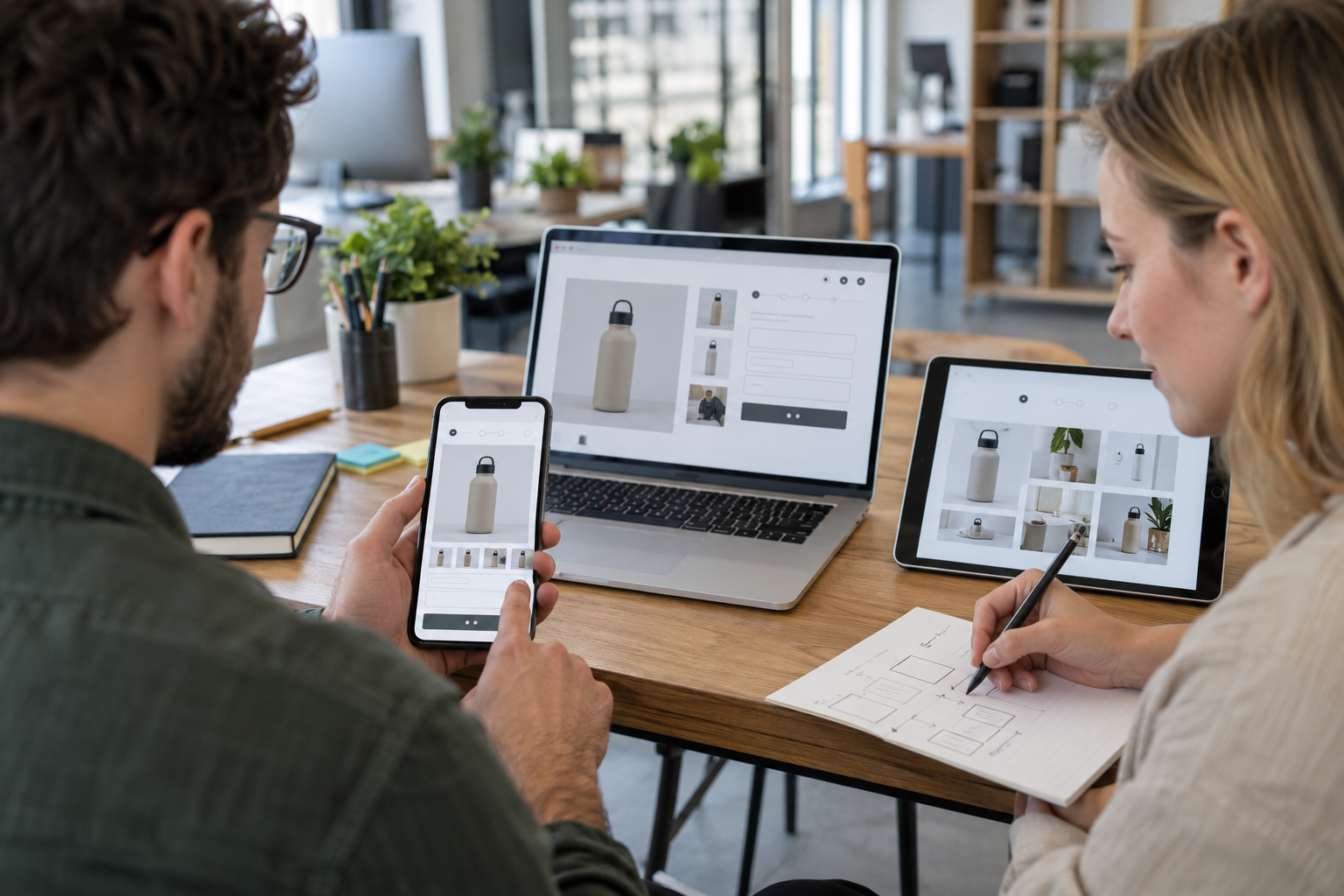
Wireframes and Prototypes Shape the Experience Early
Before the final design is built, a UI UX designer may create wireframes or prototypes. These tools help the team review page structure, content order, navigation logic, and customer flow before development begins.
High-performing user interface design ensures shoppers complete key tasks-such as selecting product variants, checking shipping parameters, or entering promo codes-without friction.
In Shopify, that may mean making product options easier to choose, showing delivery details earlier, improving filters, or making the add-to-cart path friction-free.
Wireframes are useful because they focus on layout and hierarchy before colors and images distract the team. Prototypes go further by showing how a customer may move between pages or interact with elements.
This stage can reduce wasted development time. It is easier to fix a confusing flow in a wireframe than after the store has already been built.
Product Pages Need More Than Nice Visuals
When reviewing what does a UI UX designer do on high-volume stores, product page optimization is paramount. A shopper may arrive from search, ads, email, social media, or a collection page, requiring the layout to communicate value instantly.
A designer may decide how to present:
- Product images and videos
- Variant selectors
- Size, color, flavor, or material options
- Price, discounts, and bundles
- Benefits and specifications
- Reviews and social proof
- Shipping and return details
- Subscription or reorder options
- Cross-sells and related products
A Shopify website templates review can help brands decide whether their current template supports these product-page needs or whether the layout needs a stronger structure.
Good product-page design does not overload the shopper. It prioritizes the information that helps people make decisions.
Designers and Developers Need to Work Together
A UI UX designer does not work in isolation. In a Shopify project, the designer often collaborates with developers, strategists, CRO specialists, copywriters, project managers, and the merchant’s internal team.
Design decisions need to work inside Shopify’s theme structure, app ecosystem, checkout rules, content management needs, and performance requirements. A designer may create the experience, but developers make sure it works correctly across devices and store conditions.
A Shopify website development project helps turn design plans into a functional storefront with clean code, responsive layouts, and practical editing controls for the store team.
This collaboration matters because poor implementation can damage strong design. Slow pages, broken mobile sections, inconsistent spacing, and hard-to-edit templates can all weaken the customer experience.
UI UX Design Supports Conversion Improvement
A strategic view of what does a UI UX designer do connects page layout directly to conversion metrics. Conversion depends on removing friction before customer hesitation occurs.
Design can influence:
- How quickly shoppers grasp the core value proposition
- Whether navigation feels clear
- Whether product information feels complete
- Whether forms are easy to use
- Whether trust signals appear at the right moment
- Whether mobile shoppers can buy without extra effort
- Whether the page layout supports scanning
A Shopify CRO consulting review can connect design decisions with conversion data, customer behavior, and testing priorities.
The goal is not to redesign the store randomly. The goal is to make design changes that solve specific friction points.
When a Shopify Brand Needs a UI UX Designer
A Shopify brand may need a designer when the store looks outdated, mobile performance feels weak, product pages do not explain enough, customers struggle to find products, or conversion rates are lower than expected.
A designer may also be needed before a migration, redesign, rebrand, or Shopify Plus upgrade. In those moments, the business has a chance to rebuild the experience instead of copying old problems into a new store.
Signs that design support may help include:
- Customers ask questions already answered on the site
- Product pages feel cluttered or incomplete
- Mobile shoppers drop off too early
- Navigation does not match the catalog
- The brand looks inconsistent across pages
- Promotions are difficult to understand
- Developers need clearer design direction
- The store depends too much on apps for layout fixes
A good designer brings structure to these problems. They help the brand decide what to simplify, what to highlight, and what to rebuild.
Aligning Storefront UX With Ecommerce Growth
Understanding what does a UI UX designer do allows merchant leadership to turn visual design into a measurable revenue driver. From customer research and wireframing to mobile optimization and CRO alignment, structured UX design ensures every page element supports conversion.
Scalable storefronts require clear information architecture, intuitive mobile layouts, and high-converting product pages. Partnering with Zissu Global provides Shopify brands with the specialized UI/UX design, frontend engineering, and conversion architecture needed to build friction-free shopping experiences.
