A Shopify product waitlist might attract hundreds of subscribers, yet only a small percentage may purchase when the product becomes available. The problem is not always insufficient demand. Unclear offers, lengthy signup forms, weak launch communication, or checkout problems can prevent interested shoppers from buying.
For merchants asking how can I improve my waitlist conversion rate, the answer begins with understanding where potential customers lose interest.
An effective waitlist should attract qualified shoppers, maintain their interest, and make purchasing straightforward when the product launches.
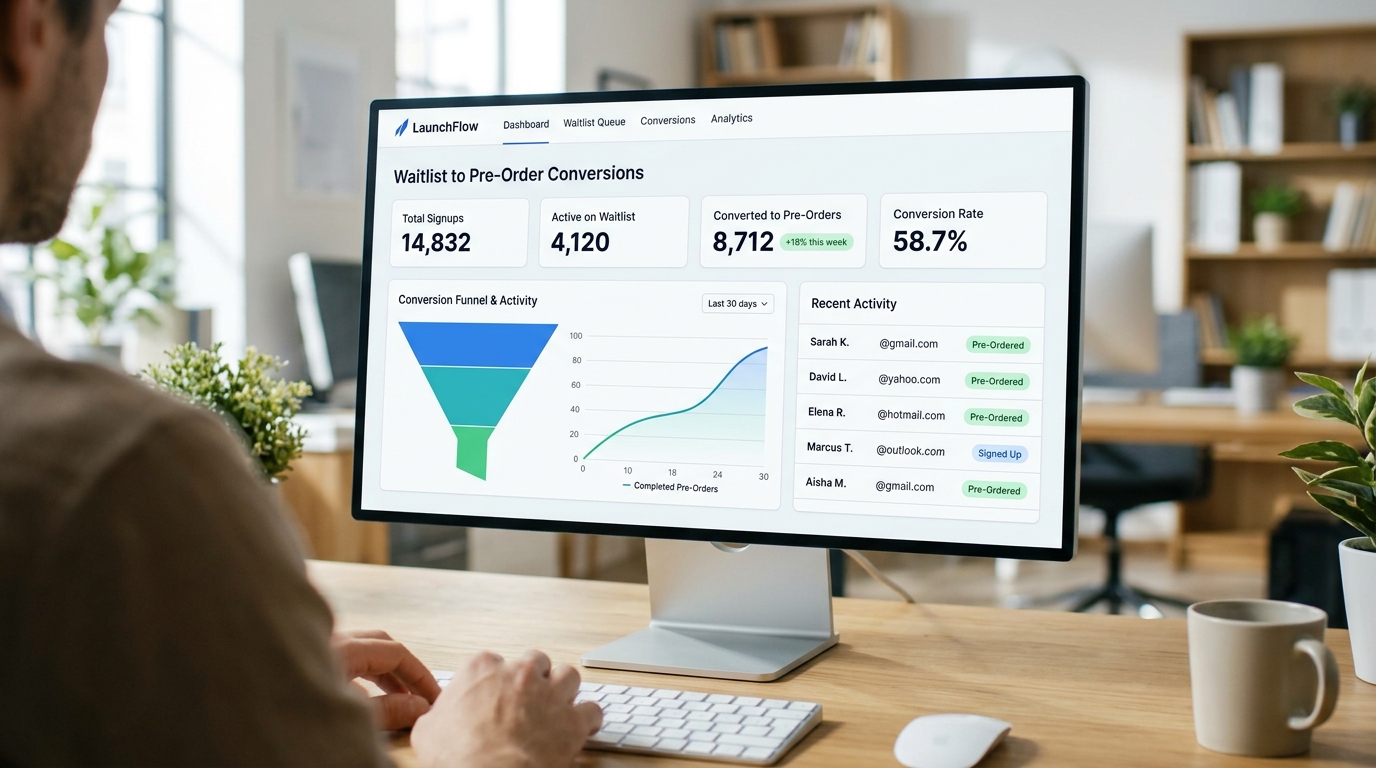
What Is a Waitlist Conversion Rate?
Waitlist performance involves two separate measurements: the percentage of visitors who register and the percentage of subscribers who eventually purchase.
| Metric | Calculation |
|---|---|
| Signup conversion rate | Signups ÷ Unique landing-page visitors × 100 |
| Waitlist purchase rate | Waitlisted purchasers ÷ Eligible subscribers × 100 |
Suppose a product-launch page receives 2,000 unique visitors and generates 200 registrations. Its signup conversion rate is 10%.
If 30 of those 200 subscribers complete a qualifying purchase within the defined launch period, the purchase conversion rate is 15%.
Track unique subscribers and purchasers consistently, using customer identifiers or appropriate attribution methods. Avoid counting repeat orders as additional converted subscribers.
8 Ways to Improve Waitlist Conversion Rates on Shopify
The most effective improvements depend on whether visitors are failing to register or existing subscribers are failing to purchase.
1. Explain the Benefit of Joining
A waitlist needs a clear purpose beyond collecting email addresses.
Explain what subscribers receive, such as advance purchasing access, confirmed launch notifications, or an introductory offer.
For example, a footwear brand launching a limited collection could describe the product, expected release period, and any genuine subscriber benefits.
Avoid vague announcements that give shoppers little reason to register.
2. Simplify the Signup Form
Each unnecessary form field introduces another opportunity for visitors to abandon registration.
For most product launches, an email address is a reasonable starting point.
Shopify Forms supports inline and popup forms, customizable fields, customer tagging, and marketing consent settings.
Merchants requiring automatic back-in-stock notifications or variant-specific waitlists may need a specialized Shopify app.
Collect additional information only when it has a clear purpose.
3. Improve the Waitlist Landing Page
Visitors should immediately understand the product and the action they are expected to take.
A focused landing page typically presents a specific offer and directs visitors toward a defined action.
For a product waitlist, prioritize clear photographs, a concise product description, and a prominent signup button.
Test the page on mobile devices and remove competing promotions that distract from registration.
The button should communicate the intended action, such as “Join the Waitlist” or “Get Launch Updates.”
4. Attract Visitors Likely to Purchase
A large subscriber count does not guarantee future sales.
Evaluate which marketing channels generate registrations and whether those subscribers purchase after launch.
For instance, shoppers arriving through a product-specific email campaign may demonstrate different purchase intent from visitors attracted by a broad giveaway.
Merchants researching how can I improve my waitlist conversion rate should compare acquisition channels using both signup and subsequent purchase data.
This helps distinguish genuine product demand from low-intent registrations.
5. Keep Subscribers Informed
A confirmation message should explain what happens after registration.
As the launch approaches, provide useful updates about product availability, confirmed release dates, or purchasing instructions.
Shopify Messaging and supported automation workflows can help manage subscriber communications.
However, waitlist notifications and promotional marketing are not necessarily treated identically under applicable privacy and electronic marketing rules. Configure consent and messaging workflows appropriately.
Avoid sending repetitive emails that provide no useful information.
6. Offer Genuine Early-Access Benefits
Early access can encourage subscribers to purchase when inventory becomes available.
Consider offering a defined purchasing window, subscriber-only product bundle, or legitimate introductory discount.
These benefits should be commercially practical and accurately represented.
Avoid artificial scarcity, invented demand figures, or countdown timers unrelated to actual availability.
A credible offer is more valuable than manufactured urgency.
7. Test the Purchase Experience Before Launch
When a product becomes available, subscribers should be able to complete their purchases without unnecessary difficulty.
Test inventory availability, discount codes, payment methods, shipping calculations, and checkout functionality across devices.
If the launch involves preorders, communicate payment and fulfillment arrangements clearly.
Businesses evaluating how can I improve my waitlist conversion rate should investigate whether checkout problems are preventing interested subscribers from converting.
A structured Shopify CRO consulting assessment can help identify usability problems and purchasing barriers.
8. Analyze the Entire Waitlist Journey
Tracking registrations alone provides an incomplete picture of performance.
Monitor:
- Landing-page signup rates.
- Confirmed subscriber counts.
- Email engagement and launch-link clicks.
- Waitlisted customers who purchase.
- Revenue attributed to eligible subscribers.
Compare results across similar product releases and investigate where customers stop progressing.
If many subscribers open launch emails but few visit the product page, review the messaging and offer.
If visitors reach checkout without purchasing, investigate the checkout experience instead.
What Is a Good Waitlist Conversion Rate?
There is no universally reliable conversion-rate benchmark for Shopify product waitlists.
Results depend on product demand, customer familiarity, acquisition sources, pricing, incentives, and the time between registration and launch.
A brand launching to existing customers may perform differently from one introducing an unfamiliar product to a new audience.
The better approach is to establish internal benchmarks and improve performance through controlled testing.
When considering how can I improve my waitlist conversion rate, prioritize subscriber purchase behavior rather than registration totals alone.
Conclusion
A successful product waitlist connects customer interest with a reliable purchasing opportunity.
Clear offers, focused landing pages, appropriate communication, and tested checkout functionality can help Shopify merchants reduce avoidable drop-offs.
Measure signup and purchase performance separately, investigate weak stages of the customer journey, and make improvements based on observed customer behavior.
Zissu Global helps ecommerce businesses evaluate Shopify conversion challenges and improve storefront experiences that support customer acquisition and sales.